
Information is fragmented
Commercial terms, planning claims, costs and design assumptions live in different files.
Drop in the OM, model, planning report, site plan, email or data room. UnlockLand reads, structures and cross-checks the material so analysis can begin without rebuilding the deal by hand.
Developer questionWhat did we receive, what does it claim and what must be verified before we spend more time?
The first days of a deal are often spent finding numbers, reconciling versions and asking which document contains the current assumption.
Commercial terms, planning claims, costs and design assumptions live in different files.
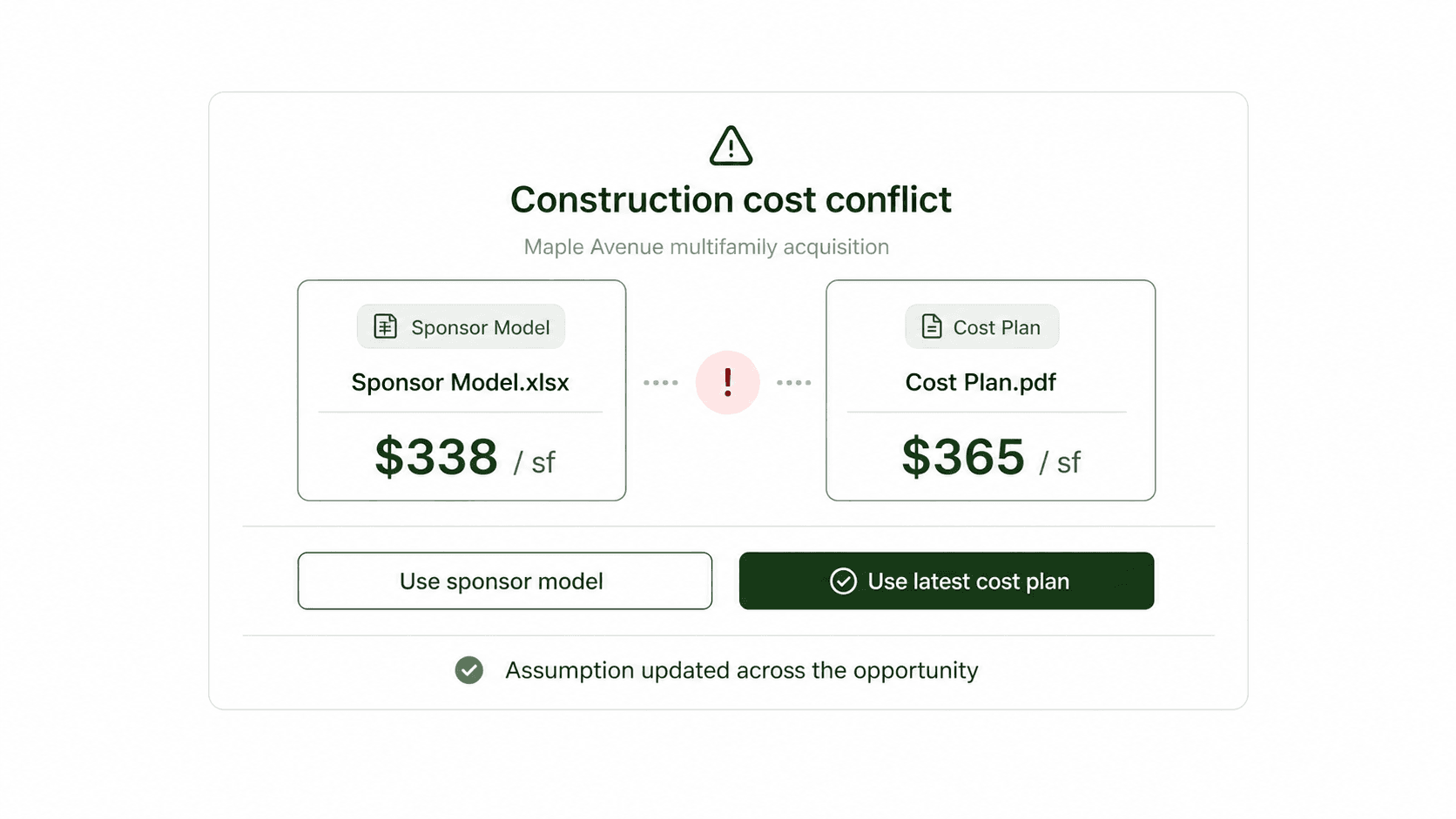
The sponsor model and consultant reports can carry different values without anyone seeing the effect.
What arrived, what was inferred and what changed becomes difficult to reconstruct later.
The original documents stay intact while the working development case is assembled around them.
Bring in emails, PDFs, spreadsheets, drawings, reports and data-room material.
Identify the site, ownership, commercial terms, program, costs, claims and assumptions.
Find missing, conflicting or unsupported information across the submitted sources.
Route questions to the team and connect verified inputs to the next analysis.
The team sees the completeness of the opportunity record and the few issues that could materially change the first decision.
“What did we receive, what does it claim and what must be verified before we spend more time?”
RecommendationBegin feasibility using the verified planning and commercial basis.
Every result stays connected to the opportunity, the assumptions behind it and the workflow that comes next.
Preserve the original file, version, author and document location behind each input.
Normalize the information required for feasibility, scenarios and underwriting.
Make inconsistent values and their downstream effect visible to the team.
Turn missing information into assigned questions rather than disconnected follow-up.
Use the structured evidence to validate what the opportunity can support.
Opportunity Intake is designed around the mixed PDFs, spreadsheets, drawings, emails and reports that development teams already receive.
No. Original materials remain preserved while structured inputs, interpretations and changes are tracked separately.
Yes. Teams can verify, revise, assign and resolve inputs before they affect downstream analysis.
Bring a live deal, your current assumptions and the decision your team needs to make.