
Sponsor submissions
Different formats, markets, asset classes and development assumptions
→Normalize sponsor submissions, validate the development thesis, compare downside and reach investment committee with independent evidence connected to the recommendation.
Review a Live InvestmentHarbour DistrictMultifamily · Vancouver
Northgate LivingMixed-use · Seattle
Station QuarterResidential · London
Illustrative investment pipeline and operating figures.
The investment team still has to normalize them, challenge the development case, coordinate advisers and explain the recommendation. The cost accumulates long before capital is allocated.
Different formats, markets, asset classes and development assumptions
→The opportunities that justify external and internal review spend
→Complete investment recommendations prepared for committee
→The few development investments selected for the portfolio
120 opportunities × 6 hours to restructure sponsor material.
24 advanced opportunities × $25,000 of third-party review.
16 advanced opportunities that do not reach committee.
8 submissions × 80 hours to rebuild the recommendation.
Illustrative annual review model. Actual volume, time and costs vary by organization.
The spreadsheet can be mathematically correct while the planning, buildable area, cost or timing assumptions underneath it are not.
Preserve the sponsor’s case, then evaluate every opportunity through your investment policy, development diligence and committee requirements.
Sponsor model, OM, plans, reports, cost plan and data room
One investment record using your policy and assumptions
Planning, physical, cost, market and delivery basis
Return, risk, downside, capital and timing on one standard
Independent professional judgment at material decision gates
IC recommendation and portfolio-level capital decision
The investment team should not spend the first day restructuring files before it can ask the first question.
One opportunity record. The sponsor case remains visible. Your investment case remains controlled.
Sponsor underwriting v1242 assumptions extracted
✓PDFPlanning opinion7 conditions identified
✓DWGConcept design398K sf measured
✓PDFCost plan18 cost categories normalized
✓ZIPInvestment data room126 files indexed
✓Financial diligence explains the model. Development diligence tests whether the physical, planning, cost and delivery assumptions can produce it.
Entitlement basis, approval route, policy support and timing exposure
Credible capacity, program, efficiency and alternative schemes
Quantities, rates, escalation, contingency and off-site obligations
Pricing, rents, absorption, exit liquidity and competitive delivery
Equity requirement, funding sequence, draw timing and concentration
IRR, equity multiple, yield, residual value and waterfall impact
Cost, delay, density, revenue, exit and financing sensitivities
Sponsor capability, dependencies, phasing and unresolved conditions
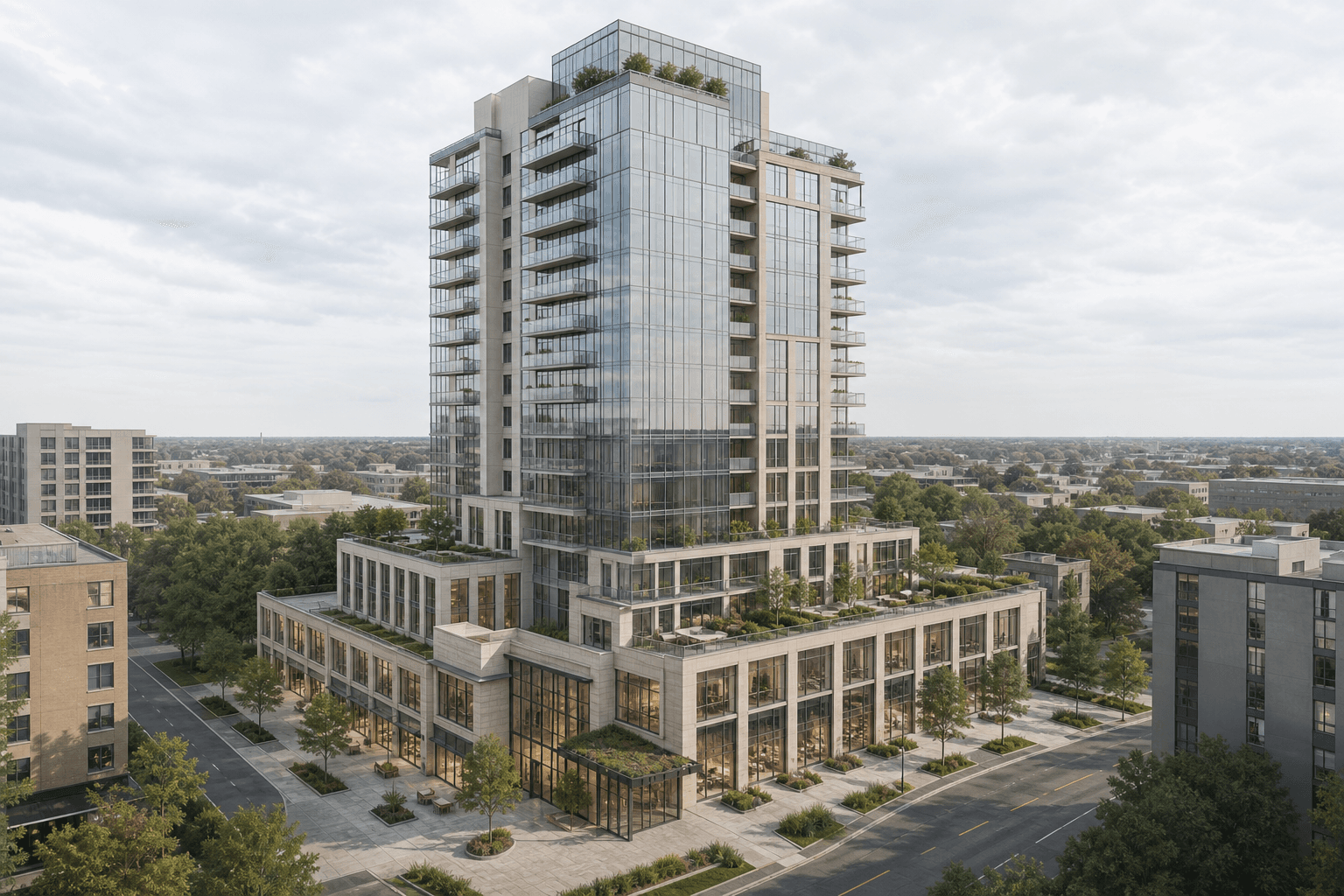
Connect every return-driving assumption to the scheme, source or professional judgment that supports it.
See return, downside, planning, cost confidence, timing and professional assurance on one decision standard.
Rapidly bring qualified independent providers into the workflow to review the assumptions most likely to change risk, timing or return.
Is the approval and density basis supportable?
Does the physical program produce the underwritten area and efficiency?
Are quantities, rates, escalation and contingency decision-ready?
Which unresolved conditions can materially change capital or timing?
Every output is generated from the same opportunity record that was reviewed during diligence.
Allocate $46.5M subject to final cost validation and planning confirmation.
Understand where capital is requested, where risk is concentrated and which opportunities are ready to compete for allocation.
Example improvement assumptions for a capital team adopting one development investment standard.
432 annual hours returned in the illustrative model
$120K of the modeled $400K exposure
352 hours returned across eight submissions
Sponsor case, house case and decision history retained
Yes. Sponsor materials, financial models, plans and third-party reports can be ingested into one controlled investment record and reviewed using your organization’s development diligence standard.
Yes. Market-specific evidence remains visible while capital, return, development, timing and risk criteria are normalized for consistent cross-market comparison.
Yes. Cost, revenue, financing, return thresholds, downside requirements, concentration limits and committee gates can reflect your internal framework.
No. It connects underwriting to the development reality behind it—planning, capacity, design, cost, timing, market and professional judgment—so the return is reviewed in context.
Yes. Planning reports, architectural studies, cost plans, market reports, surveys, legal material and data rooms can be attached, summarized, compared and cited within the investment record.
At material decision gates, UnlockLand can rapidly match qualified planners, architects, cost specialists and other providers to validate the assumptions most likely to change the recommendation.
Yes. Review stages, owners, conditions, voting requirements, outputs, audit history and final approval can reflect your existing governance process.
No. Funnel, time and diligence figures are illustrative examples designed to show where capital teams may experience review cost and decision friction. Actual results depend on your opportunity volume, workflow and adoption.
Use your sponsor material, investment policy and committee requirements.